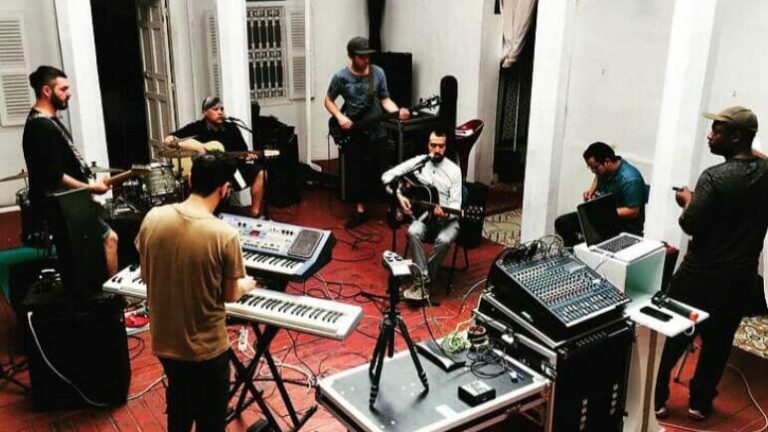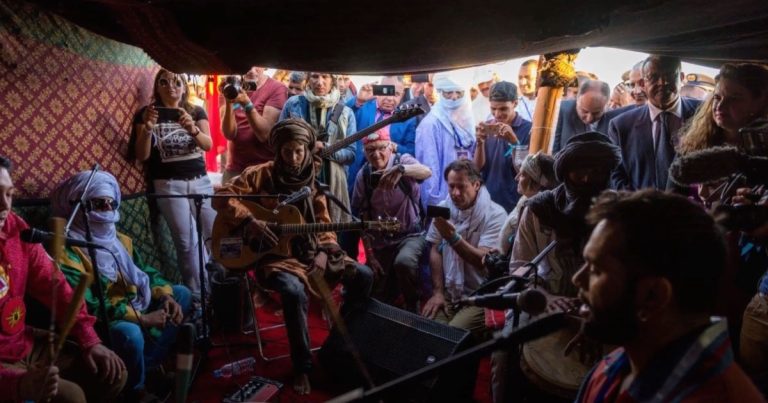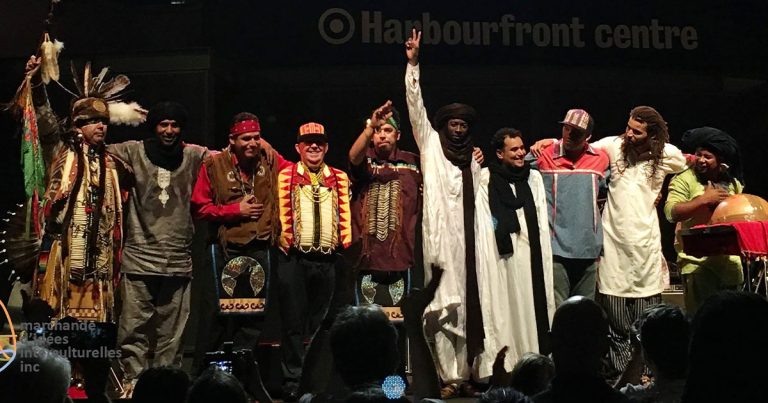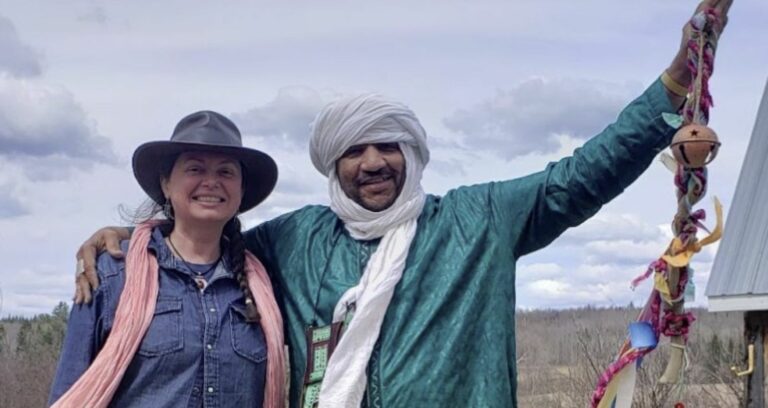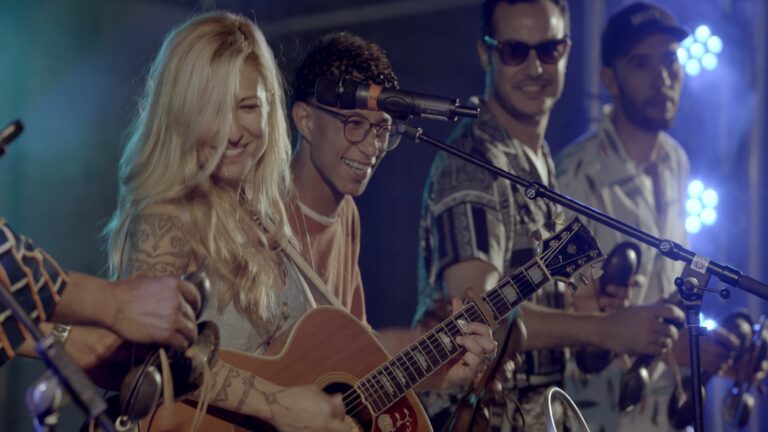

MAMU ENSEMBLE TOGETHER was curated in Quebec in the community of Mani-utenam, on the North Shore of Quebec, and in the Mauricie region, with music as a tool for dialogue.
It is thanks to funding from the Government of Canada and in partnership with Innu Takuaikan Uashat Mak Mani-Utenam, Pasa Musik and more than 15 other partners across the province, that we were able to put together sixteen days of activities and workshops divided between Mani-utenam and the Mauricie region.
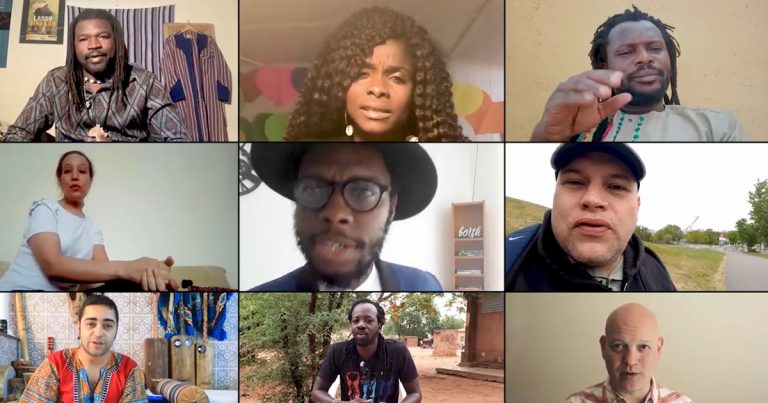
The musicians who took part in this project, which aims to engage and build bridges between communities to promote multiculturalism and the fight against racism, were:
- Shauit, a singer-songwriter originally from Mani-utenam
- Salif Sanou ‘Lasso’ also songwriter and multi-instrumentalist from Burkina Faso, and
- Saulo Olmedo Evans, multi-instrumentalist and a storyteller from Panama
To get a concrete idea of the project, simply think of how much music has unique therapeutic and emotional characteristics. In fact, music has been shown to facilitate contact, interaction, and can also help people express themselves.
It’s with that in mind that MAMU ENSEMBLE TOGETHER was curated so musicians could exchange with the communities on topics such as:
- Does our culture determine our attitudes towards others?
- Do you believe that music has an important role to play in relationships with others and why?
- What impact can a musical project like MAMU ENSEMBLE TOGETHER make in communities and how?


These inclusive discussions with the local population meant that everyone’s point of view was taken into account, it helped defuse prejudices and to identify the common bonds that unite us all. We believe in the value of artistic and human capital and in the capacity of music as a tool for dialogue to open conversation and for it to make a significant impact in communities.
With our ambassador and local musician, Mishta-Shipu McKenzie, son of Mr. Philippe Mckenzie, considered to be the father of modern Innu song, the musicians took part in activities, including school music workshops, round tables or cultural and social events. These activities inspired the artists with their creation.
In short, MAMU TOGETHER TOGETHER was a great community adventure filled with hope where everyone’s voice was heard.
PLEASE NOTE
The project that started in March 2020 in Mani-utenam had to be modified due to COVID19. However, we were able to complete 7 of the 16 days scheduled in the program.
Despite our shortened stay, we were able to exchange with elders at family gatherings, do outdoor activities with members of the community, and do a music workshop in a school during cultural week.
In a very short time, the musicians managed to collaborate on 4 songs.
The project generated great interest from the media, including a short piece Vues d’ici of Radio-Canada.
Musicians’ Biographies
Partners
- Government of Canada
- Innu-takuaikan Uashat mak Mani-utenam
- Pasa Musik
- MRC Mékinac
- Municipality of Saint-Adelphe
- Saint-Adelphe Recreation Center
- Tacos El Sombrero
- Municipality of Grandes-Piles
- Kapibouska Public Market
- AthinaDesign
- Slow Food Batiscan Valley
- Alpha Lira
- Shaputuan Museum
- North Shore Regional Museum
- Intercultural Friendship Association
- Trois-Rivières Native Friendship Centre
- EditingHugo
- Tam ti delam
- Batiscan Slope School
- Val Marie Private School
- Tshishteshinu School
- Camille-Marcoux School
- Johnny Pilot School
- Autrement d’ici
- Luc Laramée Space
- Mauricie Nature Garden
- Trois-Rivières Solidarity Committee
Quotes
Donc, c’est vraiment dans le but de mélanger les cultures… du métissage! De découvrir d’autres musiques, d’autres cultures autant humaines que musicales.
Isabelle Désy, music teacher at Camille-Marcoux School
La musique permet vraiment d’établir des liens. Elle n’a pas de frontière. Nous apprécions grandement cette collaboration. Je crois au bien-fondé de cette réunion de musiciens autochtones et non autochtones. Ceci favorisera le processus de rapprochement en cours.
Kenny Regis, ITUM – Press conference on February 19, 2020
On a toujours voulu créer des ponts. On n’a jamais abandonné. Le racisme ne date pas d’hier. Il découle de la peur de l’autre.
Lauréat Moreau, Coordinator, Shaputuan Museum – Press conference on February 19, 2020.